The Canon 35mm f/1.4 L USM lens is one of Canon’s top of the line lenses; hence the “L” status, price tag, and the red ring around the top end of the unit. The lens has a huge front element with a 77mm filter thread. Right below that is a large ring used for focusing. Users with larger hands and those that appreciate the feel of larger focusing rings will take quite a liking to this lens. Additionally, it may also be of very big use to cinematographers that put high value into their prime lenses. When your hand is cupping the lens for focusing, it can easily access the manual focus/autofocus switch right below the ring.
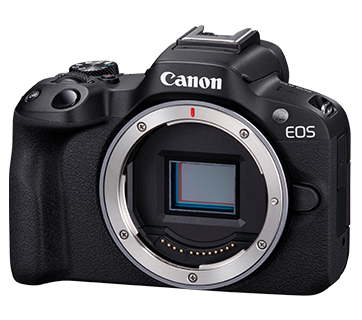
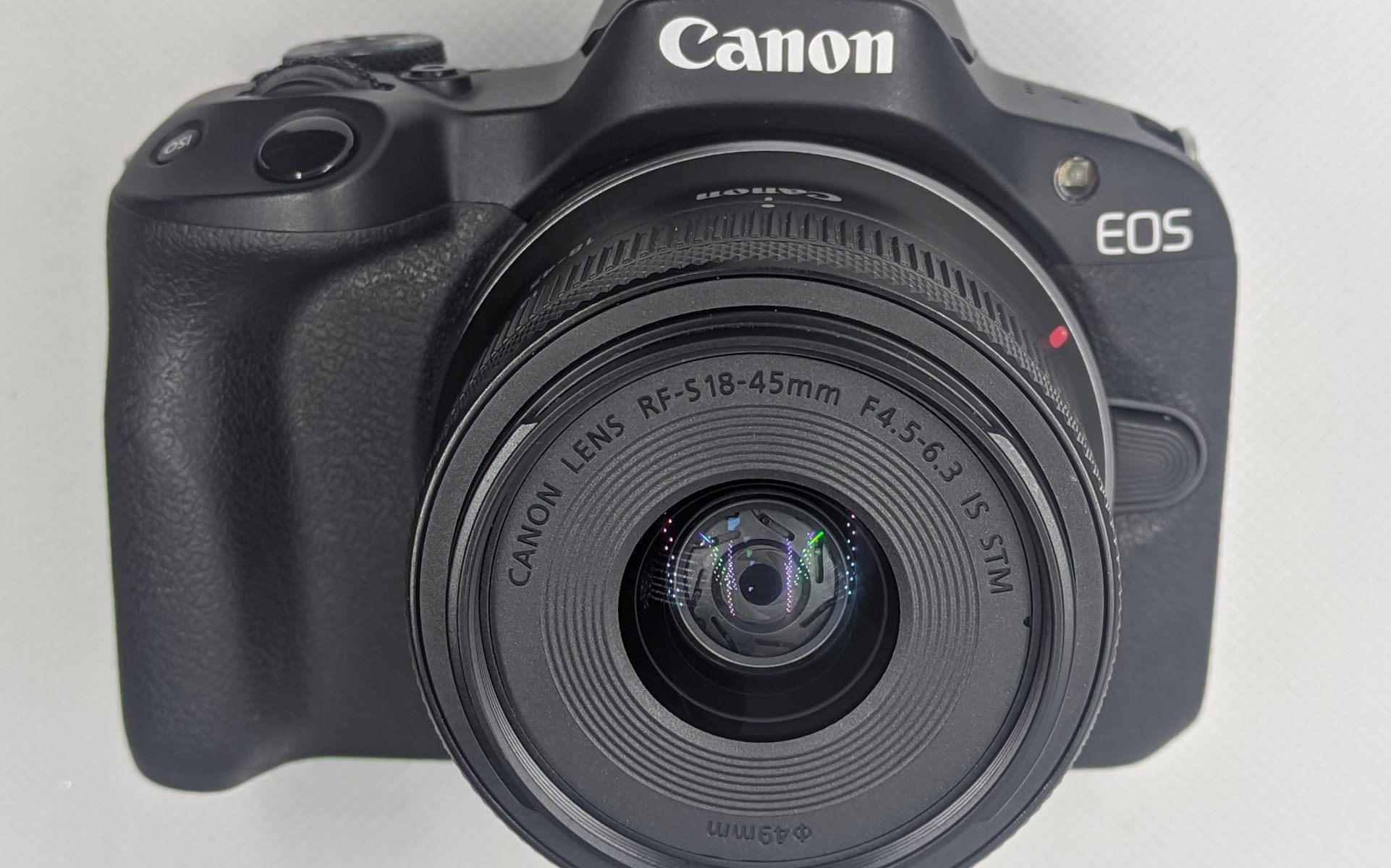
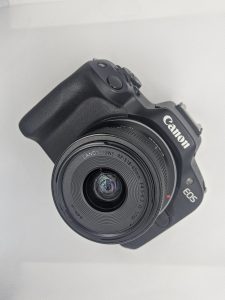
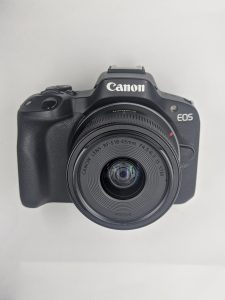
Canon R50 specialist in recording video in 4K 30p (6K oversampled) or Full HD 120p with the lightweight Canon EOS R50 gives you more room to express your creative abilities. Focusing for photos and videos is a breeze thanks to EOS iTR AF X and Dual Pixel CMOS AF II.
Highly accurate burst shooting of up to 15 frames per second allows you to capture stunning images at a resolution of 24.2 megapixels.
One-Shot AF, AI Focus AF (stills), Servo AF / Movie Servo AF
AF Point Selection
Spot AF, 1-point AF, Expand AF area (above/below/left/right or around), Flexible Zone AF 1/2/3, Whole area AF
AF System Points
Up to 651 AF frame zones
Built-in Flash
Available
Closest Focusing Distance (cm)
–
Continuous Shooting Speed (Shots Per Sec) (Up To)
Electronic 1st curtain: 12
Electronic shutter: 15Electronic 1st curtain: 12
Electronic shutter: 15**If flicker is detected, continuous shooting will slow down even when anti-flicker shooting is turned off.
Weight (g) (Including the battery and memory card) (Approx.)
*For camera kits, weight includes kit lens(es).
375 (Black) | 376 (White)
White Balance
Auto (Ambience priority / White priority), Daylight, Shade, Cloudy (Effective in twilight and sunset), Tungsten light, White fluorescent light, Flash*, Custom, Colour temperature setting (approx. 2500–10000 K)
White balance shift and white balance bracketing features available
*Flash colour temperature information transmission possible (EX / EL Series Speedlite)
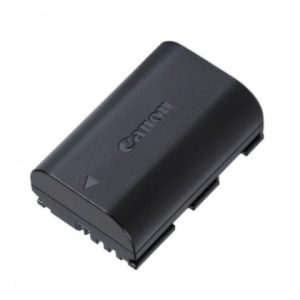
LP-E6. LP-E6N, LP-E6NH – all of the E6 batteries are forwards- and backwards-compatible, so the original LP-E6 will work in the latest EOS cameras, whilst the high capacity LP-E6NH will work in the oldest cameras that take the original E6 battery. The inly difference is their capacity.
Similarly, the LP-E4 and LP-E4N are interchangeable. However, the battery chargers are slightly different – the LP-E4 battery can be charged by the LC-E4, whilst the LP-E4N can be charged with either the LC-E4 or the LC-E19 charger.
The Sony Alpha A6500 is the third version in the Sony Alpha A6000 series, announced not long after the A6300, the camera offers a number of upgrades, including built-in 5-axis image stabilisation, a tilting touch-screen, improved grip, plus more. The camera features a 24 megapixel APS-C CMOS sensor, records 4K video, and shoots at 11fps. The A6300 and A6000 will remain on the market, offering alternative price points for this series.
Sony Alpha A6500 Features
The Sony Alpha A6500 features a 24 megapixel APS-C CMOS sensor, 11fps continuous shooting (with continuous AF) and is capable of shooting up to 307 shots continuously. The camera adds in-camera 5-axis sensor-based image stabilisation, a 3inch touch-screen, and features high-speed AF with 425 AF points and phase-detection focus.
The 3inch tilting screen is now a touch-screen that can be used to set the focus point, but can’t be used to scroll through the menu system or select items there. It can be used in playback to zoom into photos.
Sony Alpha A6500 – New Shutter Unit and 5 Axis IS
The camera has a new shutter unit, rated for 200,000 shots, and this has been re-designed to fit in the almost the same size body as the A6300, whilst also fitting in the 5-axis image stabilisation system that moves the sensor.
Like the A6300, the camera features 4K video recording, plus high-speed FullHD video recording at up to 120fps. There are numerous shooting modes, including full manual controls, custom modes, as well as smart Auto shooting, scene modes, and a panoramic mode.
Like other Sony cameras, Wi-Fi, and NFC are built-in and the A6500 supports Sony’s PlayMemory Apps, and if you register your camera with them, you will get two apps for free including a Star Trail and Multiple Exposure app. There are other apps available for free, as well as some paid apps. The A6500 also features Bluetooth, and this can be used to add location data to images.
Updated over the A6300:
New metering mode (highlight-weighted mode, entire screen average mode)
Enhanced spot metering (linked to focus area, standard or large)
Enhanced remote camera control (storage destination, raw and jpeg)
8mp stills can be extracted from 4K movies
Touch-panel AF system
Slow and quick motion 1-100fps, for up to 50x quick motion and 4x slow motion (FullHD)
Improved buffer for 269 shots at 11fps, and 307 shots at 8fps
5-axis image stabilisation (sensor-based) – up to 5 stops
Being the third A6000 camera, with the previous two cameras remaining on the market, we thought we’d show a quick comparison of main differences of these three cameras:
Following on from the A6500, Sony has introduced the A6400 in January 2019, and A6600 in August 2019, if you’d like to see how they compare, have a look at our A6400 vs A6500 vs A6600 comparison.
Key Features
24.2 megapixel APS-C CMOS sensor
5-axis sensor-based image stabilisation
3inch tilting touch-screen (touch-AF), 921k dots
2.36m dot EVF, 0.7x magnification
New front-end LSI and BIONZ X
425 Phase Detection AF points (with 84% sensor coverage)
0.05sec AF
11fps continuous shooting with AF
200,000 cycle shutter unit rating
4K video (30,25,24p) 100Mbps (from 20mp / 6K image)
ISO100 to ISO51200
Dust and moisture-resistant magnesium alloy body
3inch tilting touch-screen,
Wi-Fi, Bluetooth, NFC
Sony Alpha A6500 Handling
The Sony Alpha A6500 design has been improved slightly, with the camera now featuring two Custom buttons (C1 and C2) on top of the camera, and a third Custom button on the back. The grip is larger than the previous model, and has a textured rubber cover than extends round to the back of the camera, where there is a lip for your thumb. There is quick access to ISO, exposure compensation, and drive mode using the 4-way controller / scroll wheel. You can also get quick access to settings using the Fn/Function button, and these on-screen settings can be customised so that you have access to your favourite settings. However, strangely, despite the camera having a touch-screen, you can’t use the touch-screen to change these settings.
The camera feels well built and even the battery cover feels good, with a thick plastic used. The camera features a magnesium-alloy body that is weather-sealed, when used with a weather-sealed lens. The tilting screen and pop-up flash use metal hinges making them strong even when extended out of the camera. The memory card slot is in under the camera, in the same place as the battery.
The inclusion of in-camera image stabilisation has resulted in a heavier camera compared to the A6300, with an increase of 49g, although this increase isn’t too much with the camera feeling compact and easily stored in a compact camera bag, or large pocket, particularly with one of the smaller lenses. There are 425 phase-detection focus points covering a wide-area of the sensor, and having a touch-screen it is easy to set the focus point using the screen.
The electronic viewfinder (EVF) looks good, with a high resolution of 2.36m dots, and 0.7x magnification. The “Hi” speed “live-view” continuous shooting mode has been designed to give minimal blackout between shots, and shoot at 8fps, making it easier to track subjects. The screen looks good, although it’s worth noting that the screen has a 16:9 aspect ratio so photos appear smaller on it than they would if it had a 3:2 aspect ratio.
The menus are now colour coded, so that each main section has its own colour, for example, Photo1 (Photo options) is colour coded in red, Photo2 (Mostly movie options) is colour coded purple, etc. This is welcome, however, the photo section now has 14 pages of options (up from 9 on the A6300), and the Photo2 section has 9 pages of options. This is because Sony has organised the options into more logical categories, however, this means that some pages have only 1 or 2 options on them. You can see the options and layout of the menus in the video below:
Wi-Fi features – Wi-Fi, and NFC are built-in and the A6500 supports Sony’s PlayMemory Apps. There are apps available for free, as well as some paid apps. The A6500 also features Bluetooth, and this can be used to add location data to images. You can use Wi-Fi to send photos to a smartphone, a computer, view images on a TV, as well as use NFC to set up the connection.
Battery life – Battery life is rated at 350 shots when using the screen according to Sony / CIPA test results, which is reasonable, although is 50 fewer shots than the A6300. You can also power the camera using a portable USB charger if you need to.
8 Gigabyte boleh tangkap dalam berapa keping gambar?
8 Gb atau 8 gigabyte boleh memuatkan gambar mengikut format gambar yang ditangkap oleh pengguna. Bagi format biasa anggaran dalam 900 keping gambar. Manakala dalam format kamera dan editing anggaran dalam 300 keping. Manakala pengguna yang ingin menggunakan kedua-dua format ini anggaran gambar yang dapat dimuatkan dalam anggaran 200 keping gambar.
C.Fn III-8
+/- 20 steps
Adjust all lenses by same amount
Adjust up to 20 lenses individually
Exposure Control
Metering Modes
TTL full aperture metering with 35 zone SPC
(1) Evaluative metering (linked to any AF point)
(2) Partial metering (approx. 8% of viewfinder at centre)
(3) Spot metering: (approx. 3.5% viewfinder at center)
(4) Center weighted average metering
Metering Range
EV 1 – 20 (at 20°C with 50mm f1.4 lens ISO 100)
Exposure Comp
+/-2 EV in 1/3 or 1/2 stop increments (can be combined with AEB).
AEB
+/- 2 EV, 1/2 or 1/3-stop increments
ISO Sensitivity
Auto (100-3200), 100-6400 (in 1/3-stop or whole stop increments)
ISO can be expanded to H1: 12800 and H2:25600
Shutter Speed
30 – 1/8000 sec. (1/3 stop increments), Bulb (Total shutter speed range. Available range varies by shooting mode)
WB Settings
Auto, Daylight, Shade, Cloudy, Tungsten, White Fluorescent light, Flash, Custom, Color Temperature setting.
White balance compensation:
1. Blue/Amber +/-9
2. Magenta/ Green +/-9.
Custom WB
Yes, 1 setting can be registered
Viewfinder
Type
Pentaprism
Coverage
Approx. 98%
Magnification
Approx. 0.71x
Eyepoint
Approx. 21mm
Information
AF information: AF points, focus confirmation light.
Exposure information: Shutter speed, aperture value, ISO speed (always displayed), AE lock, exposure level/compensation, spot metering circle, exposure warning, AEB.
Flash information: Flash ready, high-speed sync, FE lock, flash exposure compensation.
Image information: White balance correction, CF card information, monochrome shooting, maximum burst (2 digit display), Highlight tone priority (D+).
DOF Preview
Yes, with Depth of Field preview button.
Eyepiece Shutter
On strap
LCD
Type
3.0″ Clear View TFT, approx. 920K dots
Coating
Dual Anti-reflection
Brightness Adj
Auto 3 levels + Manual adjustable to one of seven levels
Display Options
(1) Quick Control Screen
(2) Camera settings
Flash
Built-in GN
N/A (ISO 100, meters)
Built-in Coverage
N/A
Built-in Recycle Time
N/A
Modes
E-TTL Auto Flash
X-Sync
1/200sec
Exposure Compensation
+/-2 EV in 1/3-stop increments
Hot Shoe/PC Terminal
Yes / Yes
External Flash Comp
E-TTL II with EX series Speedlites, wireless multi-flash support
External Flash Control
Via camera menu
Shooting
Shooting Modes
Auto (Stills and Movie), Creative Auto, Program AE, Shutter priority AE, Aperture priority AE, Manual (Stills and Movie), Custom (x3)
Picture Styles
Standard, Portrait, Landscape, Neutral, Faithful, Monochrome, User Defined (x3)
Image Processing
Highlight Tone Priority
Auto Lighting Optimizer (4 settings)
Long exposure noise reduction
High ISO speed noise reduction (4 settings)
Auto Correction of Lens Peripheral illumination
Drive Modes
Single, Continuous, Self timer /remote control (10s), Self timer /remote control (2s)
Continuous Shooting
Max. Approx. 3.9fps. (speed maintained for up to 78 images (JPEG) (310 with UDMA card), 13 images (RAW))
Shutter Lag
73ms
Viewfinder Blackout
145ms
Live View
FrameRate
30 fps
Focusing
Manual Focus (Magnify the image 5x or 10x at any point on screen)
Autofocus: Quick mode, Live mode, Live Face detection mode
Metering
Real-time evaluative metering with image sensor
Active metering time can be changed
Display Options
Grid overlay (x2), Histogram, data, no data
File Information
Still ImageType
JPEG: Fine, Normal (Exif 2.21 [Exif Print] compliant) / Design rule for Camera File system (2.0),
RAW: RAW, sRAW1, sRAW2 (14bit, Canon original RAW 2nd edition),
Digital Print Order Format [DPOF] Version 1.1 compliant
Menjawab bersoalan di atas, sesuatu bateri boleh bertahan dari 1 jam sehingga 8 jam untuk sekali cas mengikut cara penggunaan. Kebiasaannya, 3-4 jam adalah tempoh yang biasa bagi pengguna gambar yang heavy user dan continues shooting terutama event yang merakam banyak moments penting seperti perkahwinan, pertunangan, konvo, etc. Stand by lah paling kurang 1 exta bateri untuk event2 yang penting.
Untuk kamera DSLR view gambar menggunakan view finder lebih menjimatkan bateri berbanding view di live view.
Bagi event yang melibatkan rakaman video 1 jam sehingga 1 jam 30 minit adalah tempoh yang biasa. Stand by satu extra battery atau dua adalah wajib. untuk rakaman video.



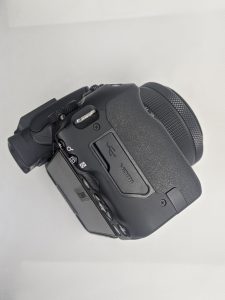
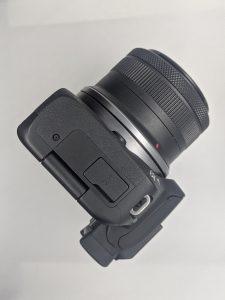
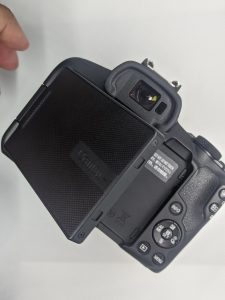
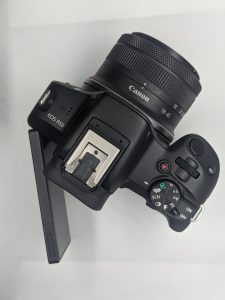
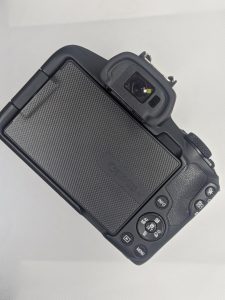
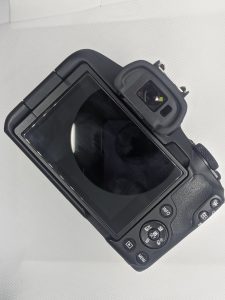
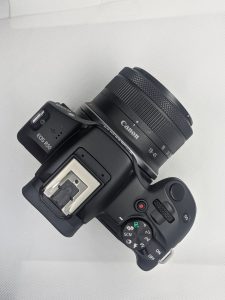
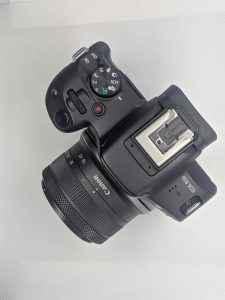
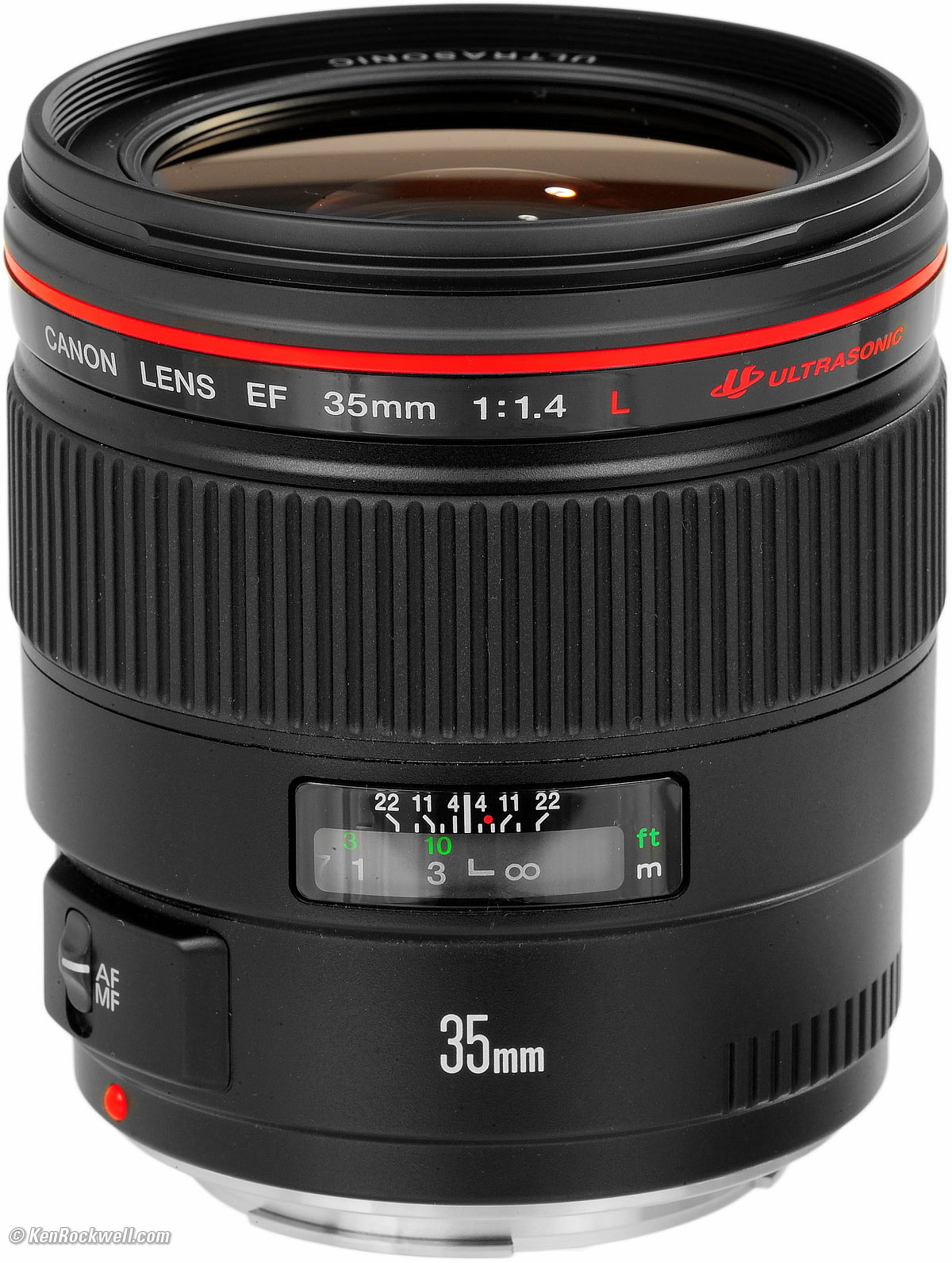
 lens is one of Canon’s top of the line lenses; hence the “L” status, price tag, and the red ring around the top end of the unit. The lens has a huge front element with a 77mm filter thread. Right below that is a large ring used for focusing. Users with larger hands and those that appreciate the feel of larger focusing rings will take quite a liking to this lens. Additionally, it may also be of very big use to cinematographers that put high value into their prime lenses. When your hand is cupping the lens for focusing, it can easily access the manual focus/autofocus switch right below the ring.